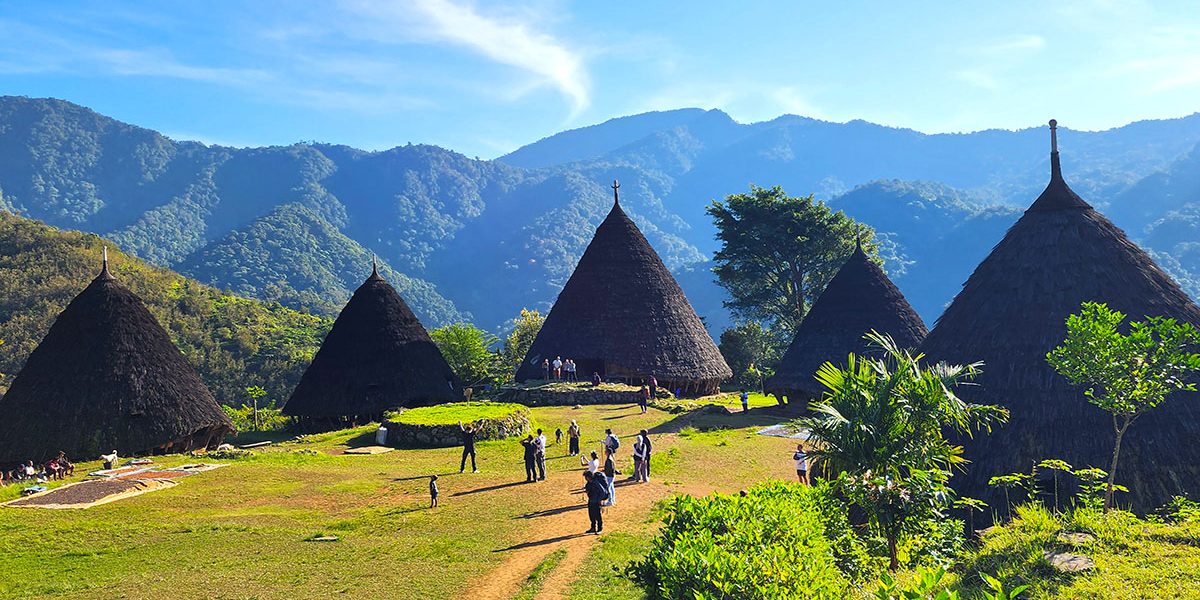
Wae Rebo Village: The Living Heart of Flores Island
Hidden deep in the mountains of western Flores Island, above the clouds and far from the rush of modern life, lies Wae Rebo Village—one of Indonesia’s most culturally intact traditional villages. Visiting Wae Rebo is not just a destination on Flores Island tours; it’s an invitation into a way of life that has remained largely unchanged for centuries.
Here, time moves slowly, stories are shared by firelight, and every guest is welcomed not as a tourist—but as family.
 The Meaning of Wae Rebo
The name Wae Rebo comes from the Manggarai language:
- “Wae” means water
- “Rebo” refers to a sacred place or forest
Together, Wae Rebo symbolizes life, balance, and harmony between humans and nature—a philosophy that still guides daily life in the village.
Unique Architecture: The Mbaru Niang Houses
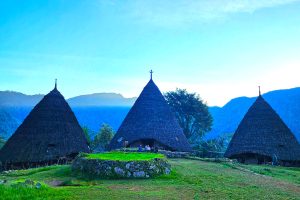
Wae Rebo is famous for its seven cone-shaped traditional houses, known as Mbaru Niang. These towering thatched structures are architectural masterpieces built entirely from natural materials.
Each Mbaru Niang has five levels, serving different purposes:
- Living space for families
- Food storage
- Seed preservation
- Sacred objects
- Ancestral offerings
The central house, Niang Gendang, is the spiritual heart of the village.
 Culture & Daily Life of the Local Community
The people of Wae Rebo belong to the Manggarai ethnic group and live according to ancestral customs known as adat.
Daily life revolves around:
- Farming and coffee cultivation
- Weaving traditional songke textiles
- Community rituals and storytelling
- Deep respect for elders and ancestors
Hospitality here is sacred. Guests are traditionally welcomed through a Waelu’u ceremony, asking permission from ancestors for visitors to stay.
History & Ancestral Origins
According to oral history, Wae Rebo was founded by Empu Maro, an ancestor who migrated from Minangkabau (Sumatra) hundreds of years ago. Guided by dreams and spiritual signs, he settled in this remote mountain basin.
In 2012, Wae Rebo received the UNESCO Asia-Pacific Award for Cultural Heritage Conservation, helping preserve its traditional houses and way of life.
 How to Get to Wae Rebo Village
Wae Rebo requires effort—but that effort is part of its magic.
Typical route on Flores Island tours:
- Fly to Labuan Bajo
- Drive 4–5 hours to Denge or Dintor village
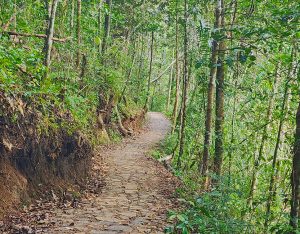
- Trek 2.5–3 hours through rainforest and hills to Wae Rebo
The trek is moderate and rewarding, with panoramic views along the way.
What to Prepare Before Visiting Wae Rebo
Because Wae Rebo is remote and traditional, preparation is essential.
Bring:
- Good hiking shoes or trekking sandals
- Light rain jacket
- Warm clothes (nights can be cold)
- Flashlight or headlamp
- Personal toiletries
- Cash (no ATMs or signal)
Electricity is limited and usually turned off at night.
What to Know Before You Go
- Mobile signal is very limited
- Shared sleeping spaces inside Mbaru Niang
- Simple local meals are provided
- Respectful clothing is expected
- Photography is allowed, but always ask first
Do’s & Don’ts in Wae Rebo Village
✅ Do:
- Join the welcoming ceremony respectfully
- Listen to local stories and traditions
- Support villagers by buying local coffee or weaving
- Dress modestly and comfortably
- Follow guidance from local hosts
❌ Don’t:
- Enter houses without permission
- Touch sacred objects
- Fly drones without approval
- Be loud or disruptive, especially at night
- Treat the village as a “museum”
Remember: this is someone’s home.
 Why Wae Rebo Is a Must on Flores Island Tours
Wae Rebo is not about luxury—it’s about connection. It teaches patience, humility, and appreciation for community. Many travelers say their time here changed how they see travel—and life.
If you’re looking for an authentic cultural experience during your Flores Island tours, Wae Rebo offers something rare: a night among living traditions, under a sky full of stars.


